
Chapter 6: Overcome Pride, Cling to Humility
#54 Our Vulnerability
Discipleship Level 2: Reaching Beyond Mediocrity
By Paul J. Bucknell

Purpose: Why pride reaches the great and the weak, quietly working through comparison, ministry, success, and everyday attitudes.
#54 Our Vulnerability
Introduction
- Does pride affect only the great and mighty? No, quite the opposite. Its treacherous hands also reach into the lives of the poor and weak. One might think those in ministry would be protected, but that also is not true.
Pride is a Common Temptation
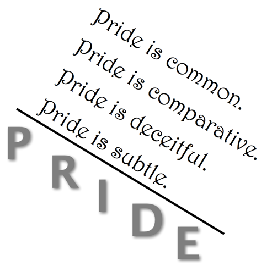
It would be an error to think that only the most beautiful, powerful, rich, and strong are susceptible to pride. Pride also stains the poorest, weakest, and ugliest soul with destructive thinking. It does not have a problem working in those from various races, sexes, heights, wealth, languages, and ages because pride does not depend on what one has but how one thinks.
Without a full appreciation of our special and unique place on earth to serve God, man easily falls into the pattern of thinking more of himself than is true or proper.
The sin of pride is able to destroy any soul because as it penetrates a person’s life; whether she is holding a baby at home or he preaches from the Bible in the pulpit, it sets us at war with God and others. Once pride gains our hearts’ appreciation, it systematically destroy us much like cancer.
Pride is Subtle
Pride in its most arrogant stages is quite obvious, but it does most of its dirty work behind the scenes. Who dares blurt out the prideful thoughts that come into his or her mind? One moment the choir member is singing to God but in a short amount of time, with a little thought favorably comparing her voice with the voice of her companion’s beside her, her holy worship has quickly degenerated into that which deeply offends God. All because of a little touch of pride.
Pride is “more than the first of the seven deadly sins; it is itself the essence of all sin.” (John Stott)
Pride is Comparative
Although we normally would encourage an examination of our gifts and position to clarify God’s purpose for our lives, we must recognize that contemplation of our activities also gives room for pride to enter. Pride subtly hides under the surface so that it might carry out its vile operations.
If the evil one can’t get us the first time around, he keeps trying to break down our resistance. At times, I find the need to fight off prideful temptations several times a day. The evil one lurks, seeking the most apt time to tempt us. It’s no wonder Jesus trained us to pray, “Keep us from evil (or the evil one).” “Lead us not into temptation” (Matthew 6:13).
The evil one can so easily catch us off guard because we are tempted to compare ourselves with people in our everyday experiences.
- “I pray better than him.”
- “I make more money than her.”
- “I know that. Why don’t they?”
- “My kids are better than hers.”
- “I speak better than him.”
Deceitful Comparisons
The list goes on and on. Our first thoughts ponder whether we are better than another, and the following thoughts smugly lead us to conclude that the other person is less adequate, gifted, etc. than ourselves. The temptation swallows our heart with a powerful, prideful conclusion of self-congratulations.
We find it hard to sincerely congratulate those doing well in our area of calling or expertise. It is much easier to look down on our colleague’s work than to applaud it, even when it is better. We think more highly of our own work and thus covet praise from others. If we do acknowledge another person’s work, it is often because we care more about how we appear to others, not because we really think that way.
There is no end to the temptations that the evil one can toss at us. Unaware, we accept these suggestions of pride as our own. Our flesh loves to feed on pride and thus causes us to act quite deceitfully and selfishly. It’s no wonder those in power often become corrupt. Paul tells us to regularly intercede for those in power, and no doubt this is one of the reasons (1 Tim 2:1-2).
We like to think we are better than others. This is, however, opposite to the call to humble ourselves and to love one another. If we think we are better than others, then love is perverted into a condescending treatment of others. Colonialism, Marxism, secularism, racism, capitalism, religiosity, etc., all exhibit this behavior because it is man’s natural tendency, empowered by pride. Competition is good when we respect what God is doing through others.
Pride keeps us far from excellence because we neglect to rely on God’s grace to help us accomplish greater things. Instead of assisting us, God must fight against our arrogance.
Pride in Ministry
One of my jobs is to train others. My goal is to train them to do better than I. However, how do I feel when one of those individuals does well? The devil is there on the scene with his assistant demons to insert a suggestion of pride into my mind.
In a flash, the thought, “I am better than he” or “Hah, what does he know?” flows through my mind. Along with these temptations are the thoughts I use to justify my evil thinking to placate my conscience.
- “I’m better than him at counseling.”
- “I can speak better than the pastor.”
- “I wish he wouldn’t be part of our church.” (God sends him but we don’t think we need him.)
- “I have a higher degree than she does.” (We wrongly think that education is a substitute for spiritual communion and calling.)
- “This teaching (from God’s Word) is not important.” (We twist God’s words by emphasizing things we want to say - e.g., prosperity gospel.)
Instead of being protected from pride, those in ministry become more susceptible. All of us can fall from pride, but those closer to God, those more gifted, wealthier, and the most experienced must vigilantly be on guard lest they join Lucifer’s company.
Points of Reflection
How does pride reach into the lives of the poor and weak?
Explain to the best of your ability how Satan and our flesh uses comparison to induce pride.
Why is it hard to sincerely congratulate others for their success? Do you have this problem? Elaborate.
Name one way you are tempted to compare yourself with others.