
Priesthood, Kingship, and Christian Life
Paul J. Bucknell
Samuel, Saul, and David reveal the need for faithful spiritual leadership while showing how God trains His people to value His presence, Word, and ways.
Avoiding the Pitfalls of Life
The Books of Samuel effectively show how David avoided common mistakes that people often make when pursuing successful ministries. However, he followed the usual steps a worldly person might take, especially regarding women. Before examining these last two chapters, let’s get an overall view of 1 & 2 Samuel, which are considered a single book in the Hebrew Bible.
The Priesthood
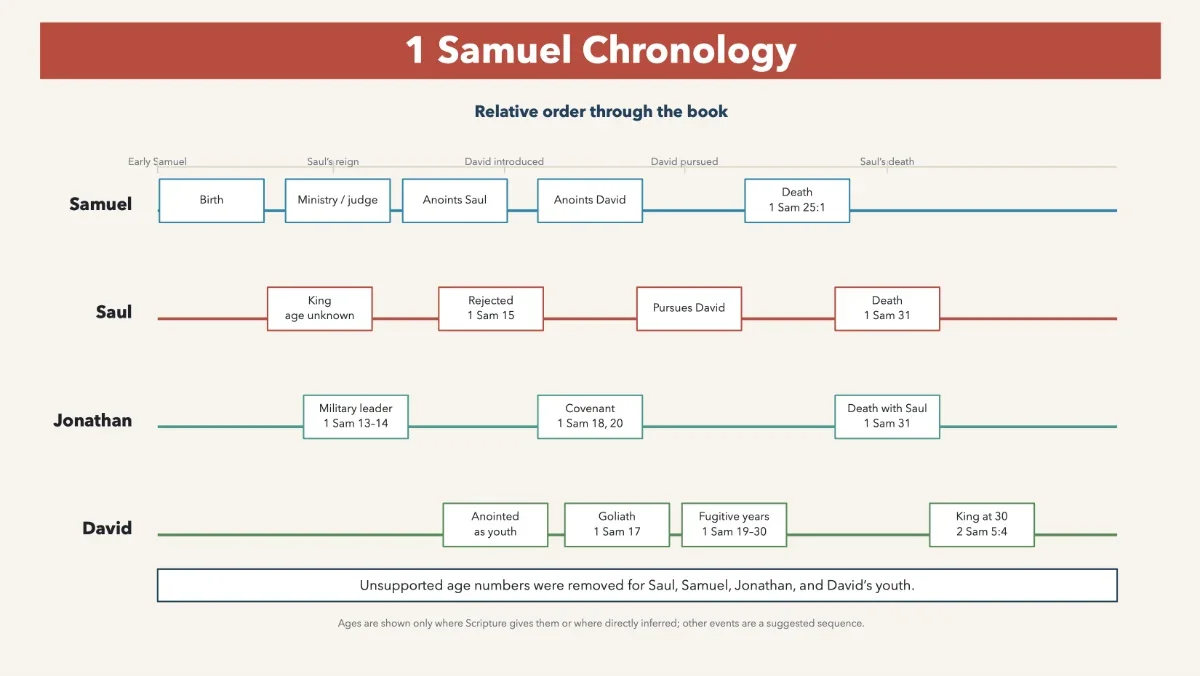
The books of Samuel begin with a crisis. The priesthood had become corrupt, and people could no longer seek or find God. Eli mishandled God's sacrifices (1 Samuel 2:12), so God had to appoint someone, namely Samuel, into the priestly line. Samuel was a prophet and judge, but through adoption, he also became a priest. Samuel offered sacrifices (1 Samuel 13:12-13) and was recognized alongside other highly regarded priests, such as Moses and Aaron (Psalms 99:6).
Samuel, no doubt a type of Christ Himself, grew up and faithfully served God's people. “Thus Samuel grew and the LORD was with him and let none of his words fail” (1 Samuel 3:19). Eli lived such a long life not because he was wise and holy but because the Lord did not want His work to be further desecrated by Eli’s sons.
Samuel led the people back to God (1 Samuel 7:3), but this renewal was short-lived because it was not wholehearted. Samuel attempted to oversee the people through his annual tours, but their hearts still lacked trust in the Lord. They might have outwardly conformed when Samuel was nearby, but inwardly, they did not. Even Samuel, with his aging years, could see that he lacked a long-term plan to change his people's hearts. Samuel’s sons wouldn’t be able to do it.
“And they said to him (Samuel), ‘Behold, you have grown old, and your sons do not walk in your ways. Now appoint a king for us to judge us like all the nations’” (1 Samuel 8:5).
However, the Lord would raise up a priest who faithfully serves God's people. God would use the weak priesthood to fulfill His greater plans.
“But I will raise up for Myself a faithful priest who will do according to what is in My heart and in My soul; and I will build him an enduring house, and he will walk before My anointed alway” (1 Samuel 2:35).
This, of course, was not fully seen in Samuel, who died, but in Jesus, who rose in the new priesthood.
The Kingship
The kingly theme is also very strongly emphasized. The Lord summarized it perfectly: “Listen to the voice of the people in regard to all that they say to you, for they have not rejected you, but they have rejected Me from being king over them” (1 Samuel 8:7). The early Israelite society had remnants of worship of Yahweh, but they did not trust Him. Let’s pause for a moment and remember what God was creating.
The Lord established the Law and covenant so that the people could draw near to Him without being harmed. They rejected His mercy and refused to draw near to Him. God was king, but they rejected Him. Instead of ending this unrepentant Israelite nation, the Lord allowed the people to form their own monarchy like other nations. This became another key aspect of how God used this part of His redemptive plan to draw a people to Himself.
King Saul, initially seeming promising because of his humble beginnings, quickly revealed an impure heart toward the Lord. Time and again, he compromised his decisions before God and followed the people's lead. Although Israel's society appeared somewhat renewed under this monarchy, the Lord knew full well that it would eventually lead to other undesirable excesses.
Just as God rejected Eli and brought Samuel into the priesthood, He also abandoned Saul—who himself turned away from the Lord (1 Samuel 16:1)—and chose to replace him and his royal successor with David. From chapter 16 to the end (chapter 31), 1 Samuel carefully describes how the Lord specifically worked in David’s life. At the same time, we gain many insights from Saul’s pursuit of David that explain why the Lord rejected Saul from becoming king. Therefore, the Lord planted another seed—similar to Samuel’s role in the priesthood—by His promise to David.
2 Samuel
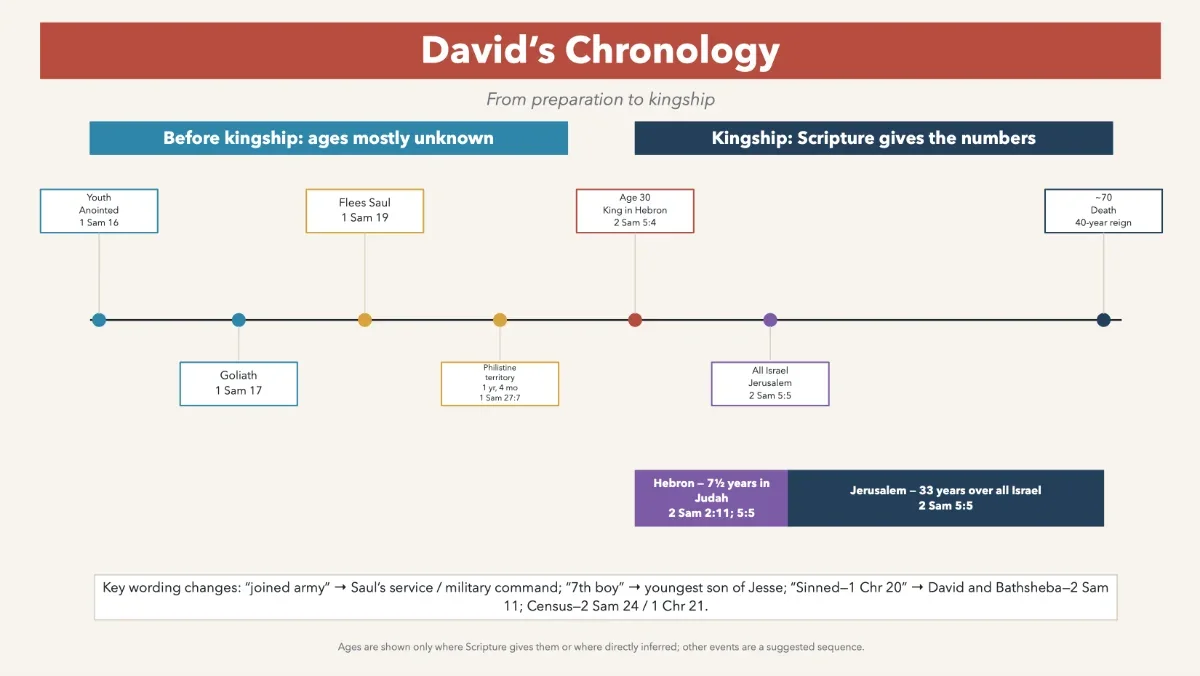
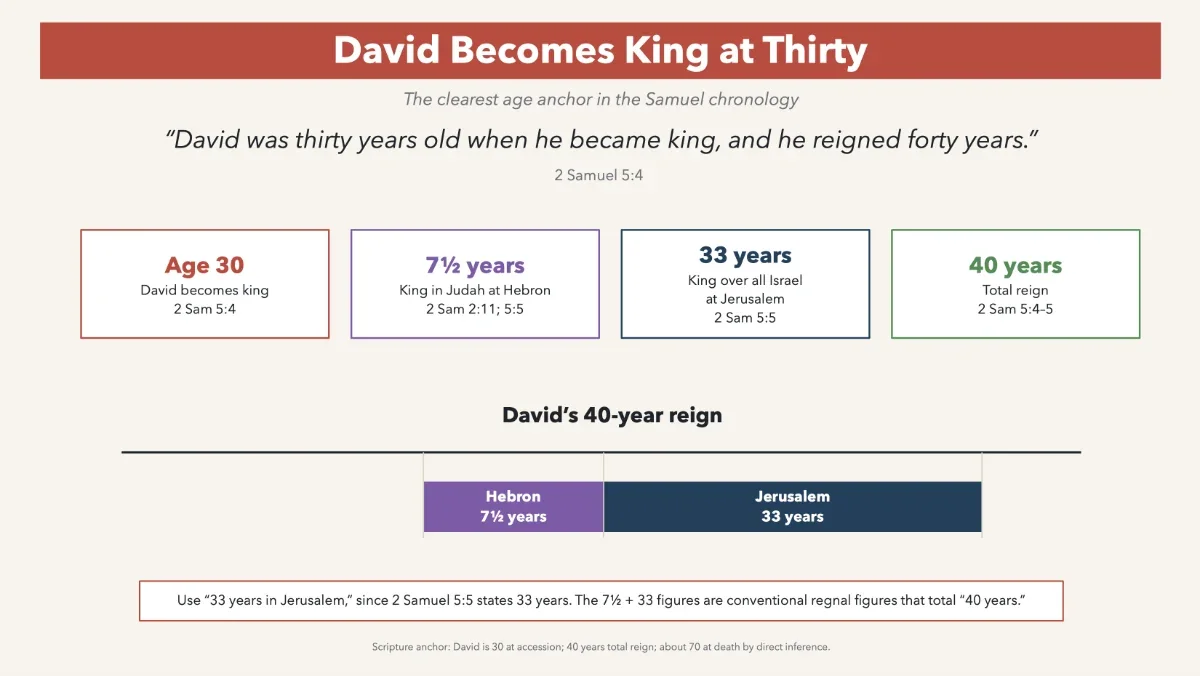
Blessings often come with struggles for those in key positions. They are tested to see whether they can uphold God’s leadership or if they are willing to act in ways that show their own rebellious tendencies. Saul ruled for 40 years, and so did David (and later his son Solomon). David’s first seven years as king were only over Judah. The scripture clearly shows how David gained power. In fact, he was slow to overthrow other leaders like Saul. He made a point to avoid eliminating key men so he could succeed them. That’s why he only ruled Judah for seven years.
“At Hebron he reigned over Judah seven years and six months, and in Jerusalem he reigned thirty-three years over all Israel and Judah” (2 Samuel 5:5).
David did not seek after powerful positions. Instead, he valued God, friendships, and his vows, such as when he reached out to Saul’s grandson, Mephibosheth. However, once his reign was secure, he faced other temptations. It was at this point that he engaged in an adulterous affair with Bathsheba. David chose his own desires over God's commands. He valued his lusts more than his obedience to God (2 Samuel 11).
The entire story with Absalom was closely connected to David’s own sin with Bathsheba, and as a result, David was hesitant to confront him properly. Although David initially seemed to grasp the power of forgiveness, his later retreat into a cloud of depression shows that he pulled away from God. The temptation he faced was different, but it had serious consequences not only for himself but also for others. He neglected his duty as overseer of justice and took a weak, compromised stance toward Absalom, leading to serious repercussions.
After this period of depression, David moves forward but becomes entangled in a more significant sin carefully placed at the end of 2 Samuel. We cannot be certain it was the last thing David did before he died, but it was certainly the most important. With Bathsheba, the affair was personal, but this one was on a national level. In the former, a few were seriously harmed, but here we have thousands upon thousands lying dead across the land of Israel.
Christian Life
God’s Word is filled with powerful teachings on how we should live out our Christian lives. A Christian life is defined as living in light of God’s purpose and will, empowered by His strength. God can use young but faithful people who seek Him. Therefore, each of us will face tests in life to examine our sincerity and devotion to God. By looking at key moments in the lives of Samuel, Eli, his sons, Saul, and David from God's perspective, we are encouraged to pursue His will more earnestly.
What will we be known for? Our status isn't what matters most. What matters is that the Lord sees how we pursue Him. Like David, God will carefully train (think disciple) us so that we can accomplish His works. When we experience God’s success, pride can become our greatest enemy, making us think our desires are more important than God’s ways. May God keep us faithful in our humble walk with Him. We aren’t kings or priests, but we are His royal priests. The Lord relies on us to faithfully prioritize His Word and ways in our lives.
“But you are A CHOSEN RACE, A royal PRIESTHOOD, A HOLY NATION, A PEOPLE FOR God’s OWN POSSESSION, that you may proclaim the excellencies of Him who has called you out of darkness into His marvelous light” (1 Peter 2:9).
In a true sense, they are unlikely candidates for being adopted into the Kingdom of God. But since we have found this to be the case, we must discipline our lives to live rightly so that we can, through prayer and practical means, minister His love in this world.