1 and 2 Samuel: An Introduction and Overview
Paul J. Bucknell
The books of Samuel show how God works through corrupt institutions, weak leaders, faithful servants, and difficult circumstances to advance His redemptive purposes.
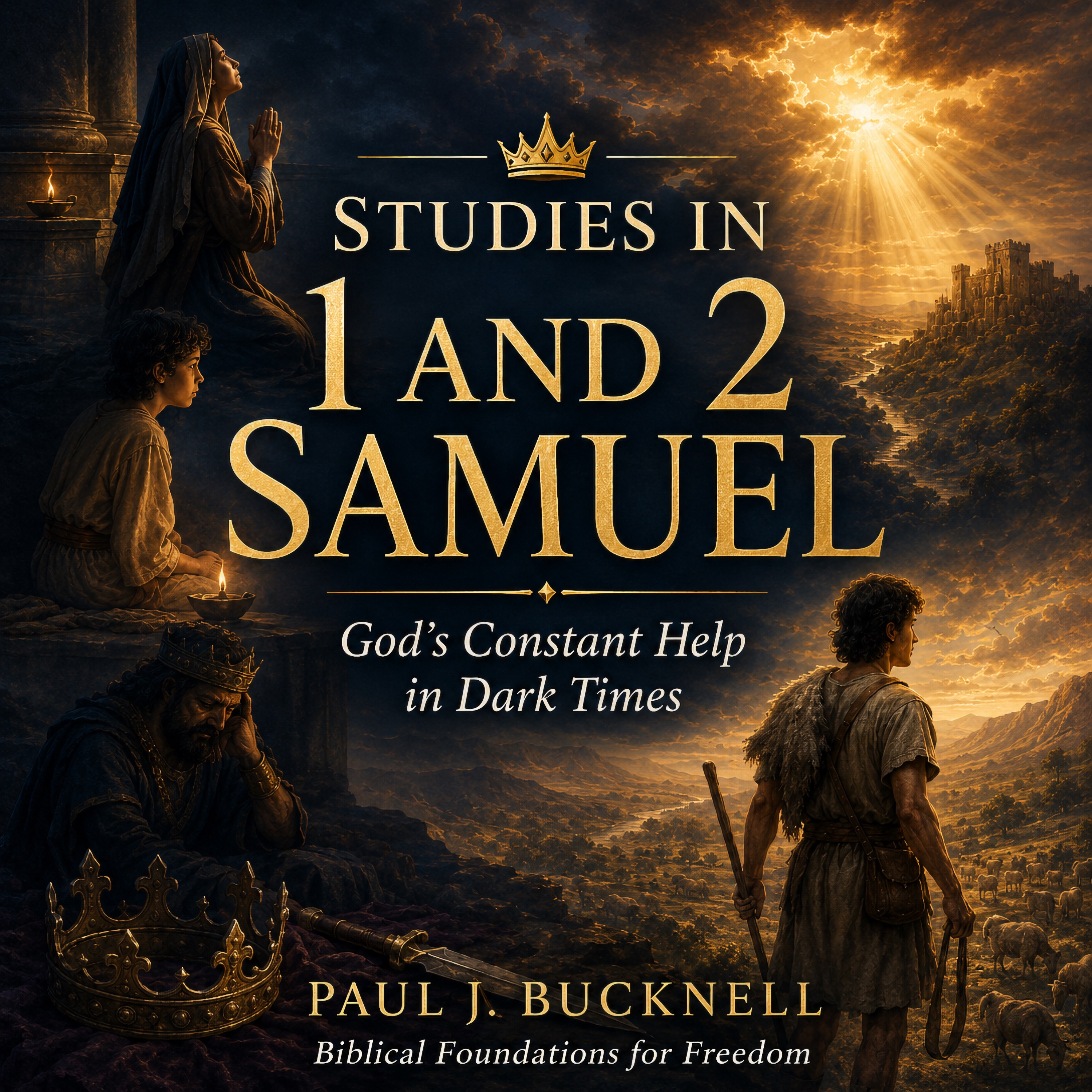
Studies in 1 and 2 Samuel Podcast
God’s Constant Help in Dark Times
Walk through the lives of Samuel, Saul, Jonathan, and David with Pastor Paul J. Bucknell. This 22-episode Bible teaching series explores prayer, renewal, leadership, obedience, jealousy, suffering, discernment, failure, and God’s faithful help.
New episode each Wednesday beginning July 22, 2026.
Purpose of 1 & 2 Samuel
While 1 and 2 Samuel emphasize the need for a pure priest, holy prophet, and great king like Jesus Christ to lead His people, they also teach us how to view life and make wise choices in our daily Christian walk. God guides His people by providing learning experiences that help us see life clearly and make wise decisions in this secular world.
God’s intervention in our world is evident throughout 1 & 2 Samuel, demonstrating how He provides help. Compromised worship damages one’s relationship with God and devotion to Him instead of nurturing pure and sincere hearts. The background of 1 Samuel offers real examples of how God intervenes in history, from which we can learn. Major pieces of God’s cosmic puzzle are being carefully put into place. Who is paying attention? We often forget history’s lessons—those fortunate enough to study it—but greater things are happening now. Each of us has our lives to respond to our Lord within the circumstances we face.
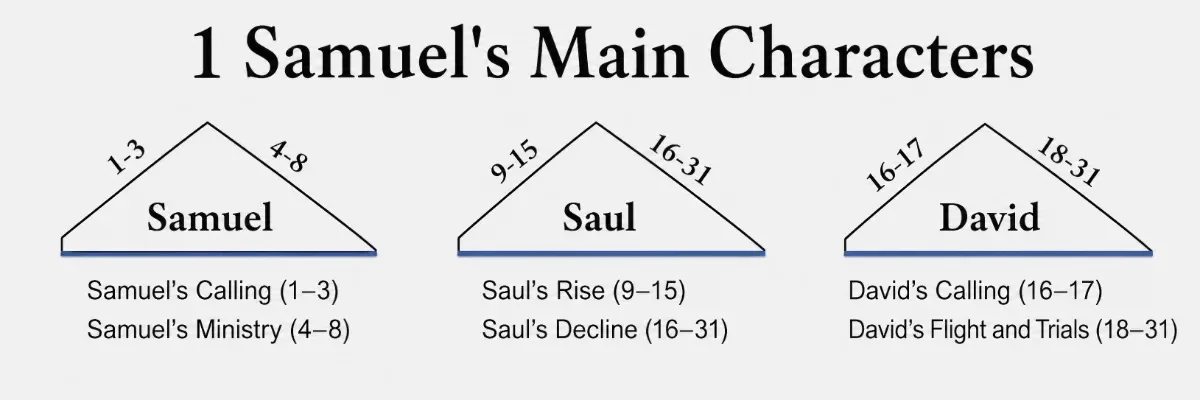
The Kingdoms of Saul, David, and Solomon
1 and 2 Samuel cover the periods of Samuel, Saul, and David. Samuel is the priest and prophet who, at the people’s demand, agrees to anoint a king. King Solomon’s reign is depicted in 1 Kings, which continues the story of Israel. Below is a timeline of the United Kingdoms of Saul, David, and Solomon.
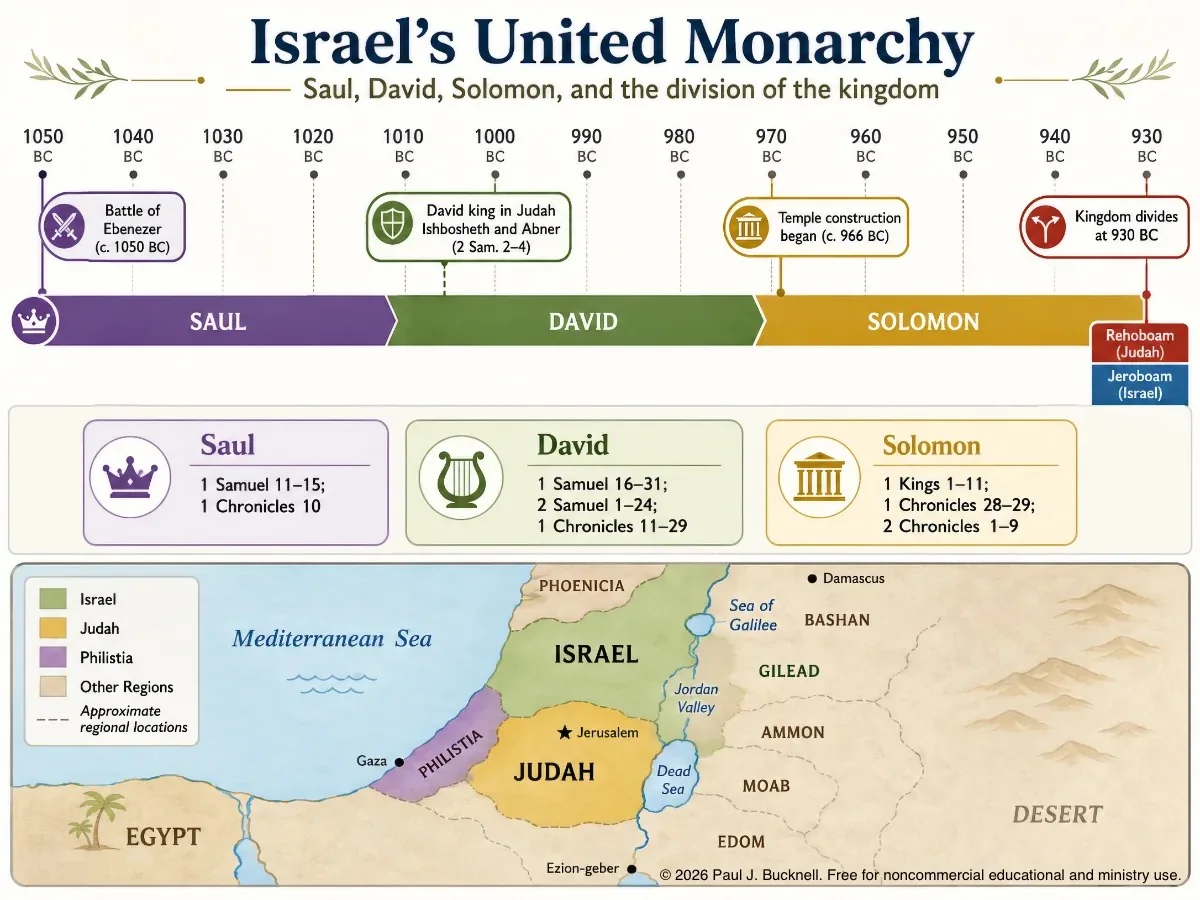
Israel’s future
1 Samuel starts with a corrupt priesthood (1 Samuel 1-3). But God stepped in divinely and directed how events unfolded. He would send divine life to a new priest who would bring new life. The priesthood is a position to hear God’s voice, not to use the office for personal gain. This shows the dire need for a true priest.
The second section, 1 Samuel 4-7, highlights the second problem, which, in some ways, was a consequence of the first. Humanity relied on outward forms rather than a genuine spiritual relationship with God. We saw how the Israelites casually trusted God alongside their idols. They brought the ark of the covenant into battle, thinking it was a good luck charm. God sharply rebuked them. God did not need people to protect His interests, but mankind did.
In chapter 8, a new phase begins within 1 Samuel that extends across the entire Bible. The Israelites wanted to rely on the security of having a king. They did not believe that God, though great and mighty, could properly rule them. One would think that after their revival in 1 Samuel 7, they would have developed greater trust in God, but perhaps, as 1 Samuel 8:1-3 suggests, they further lost hope in God’s way.
And so, the Israelites would have an earthly king, but he would always be second-rate and far inferior to God’s own leadership. The purpose of 1 and 2 Samuel is subtle and contains several layers of teaching. Most importantly, it highlights the practical application of biblical principles to our lives. Beneath these interactions between God and mankind, there is a larger framework that underpins these life principles. 1 & 2 Samuel emphasize these core life principles.
David as King
There were two qualities that set David apart as a notable man of God, greatly used by Him.
1) God chose to bless him. This idea is repeatedly emphasized throughout 1 and 2 Samuel. I encourage you to study these books. “For the Lord of hosts was with him” (2 Sam 5:10). Whenever there is a blessing from our leaders, it always flows through them by God’s grace.
2) David was convinced that the Lord’s presence was more important than a mighty army, great wealth, or a powerful mind. In 2 Samuel 6:1, David sought to bring the ark of God closer to him, and even after his failure, he continued to seek the Lord’s presence (2 Sam 6:12). The Psalms of David wonderfully trace his life’s ups and downs and his pursuit of God.
1 Samuel Study Directory
The coordinated studies combine written teaching with matching video and audio on the principal page for each distinct teaching. Longer studies continue across readable parts, while class questions and handouts remain separate.
Samuel’s calling and Israel’s renewal
- 1 Samuel 1:1–2:11 — The Birth of Great Things
- 1 Samuel 4 — Scenes from the Cosmic War
- 1 Samuel 5–6 — The Ongoing Contest with God
- 1 Samuel 7 — The Beginning of Renewal
- 1 Samuel 8 — The Compromise for a King
Saul’s calling, selection, and decline
- 1 Samuel 9–10 — Calling and Confirmation
- 1 Samuel 10:17–27 — Preoccupied
- 1 Samuel 11:11–12:5 — Building a Life Testimony
- 1 Samuel 12:6–25 — Choices and Their Outcomes
- 1 Samuel 13 — The Big Question on Saul’s Rejection
- 1 Samuel 14 — The Spirit of Faith
- 1 Samuel 15 — Disobedience and Demise
David’s faith and later trials
- 1 Samuel 16 — Waiting for Ministry
- 1 Samuel 17 — Faith in the God of Israel
- 1 Samuel 17 — The Battle Is the Lord’s Handout
- 1 Samuel 18 — Great Friends and Horrible Jealousy
- 1 Samuel 18 — Friendship and Jealousy Study Handout
- 1 Samuel 18:1–4 — Exploring Deep Friendships
- 1 Samuel 19–21 — David Faces His Life Crisis
- 1 Samuel 21–22 — Facing Depressing Circumstances
- 1 Samuel 29–30 — Strengthening Oneself in the Lord