The Beginning of Renewal
1 Samuel 7:1–17
Paul J. Bucknell
3. The Celebration of Our Freedom (1 Samuel 7:10–14)
“7:10 Now Samuel was offering up the burnt offering, and the Philistines drew near to battle against Israel. But the Lord thundered with a great thunder on that day against the Philistines and confused them, so that they were routed before Israel. 11 The men of Israel went out of Mizpah and pursued the Philistines, and struck them down as far as below Beth-car. 12 Then Samuel took a stone and set it between Mizpah and Shen, and named it Ebenezer, saying, "Thus far the Lord has helped us." 13 So the Philistines were subdued and they did not come anymore within the border of Israel. And the hand of the Lord was against the Philistines all the days of Samuel. 14 The cities which the Philistines had taken from Israel were restored to Israel, from Ekron even to Gath; and Israel delivered their territory from the hand of the Philistines.” (1 Samuel 7:10–14)
The Philistines approached to attack while Samuel was offering the sacrifice. Repentance did not mean that Israel would never face another threat. In fact, the enemy struck at the very moment the people were gathered before the Lord. But now the situation was different. Israel no longer trusted the ark as a religious object or as a means of copying the gods of the nations. The people had humbled themselves, and Samuel was interceding. The Lord thundered against the Philistines and confused them. Israel then pursued them. God brought the decisive deliverance, and the people acted in obedient courage. This balance is important. Freedom is not achieved by human power, yet grace does not make us passive. The Lord fights for His people, and His people rise to walk in the victory He gives.
The result was greater than just escaping from one battle. The Philistines were defeated. The cities that had been captured were restored. Territory was regained. The hand of the Lord remained against Israel’s enemies during Samuel’s time. Renewal began in the heart, but its effects extended outward into the life of the nation.
Samuel then set up a stone and named it Ebenezer, saying, “Thus far the LORD has helped us.” Ebenezer means a stone of help. The stone served as a public testimony. Israel was not to credit the victory to its own strength, better organization, or courage. The Lord had helped them.
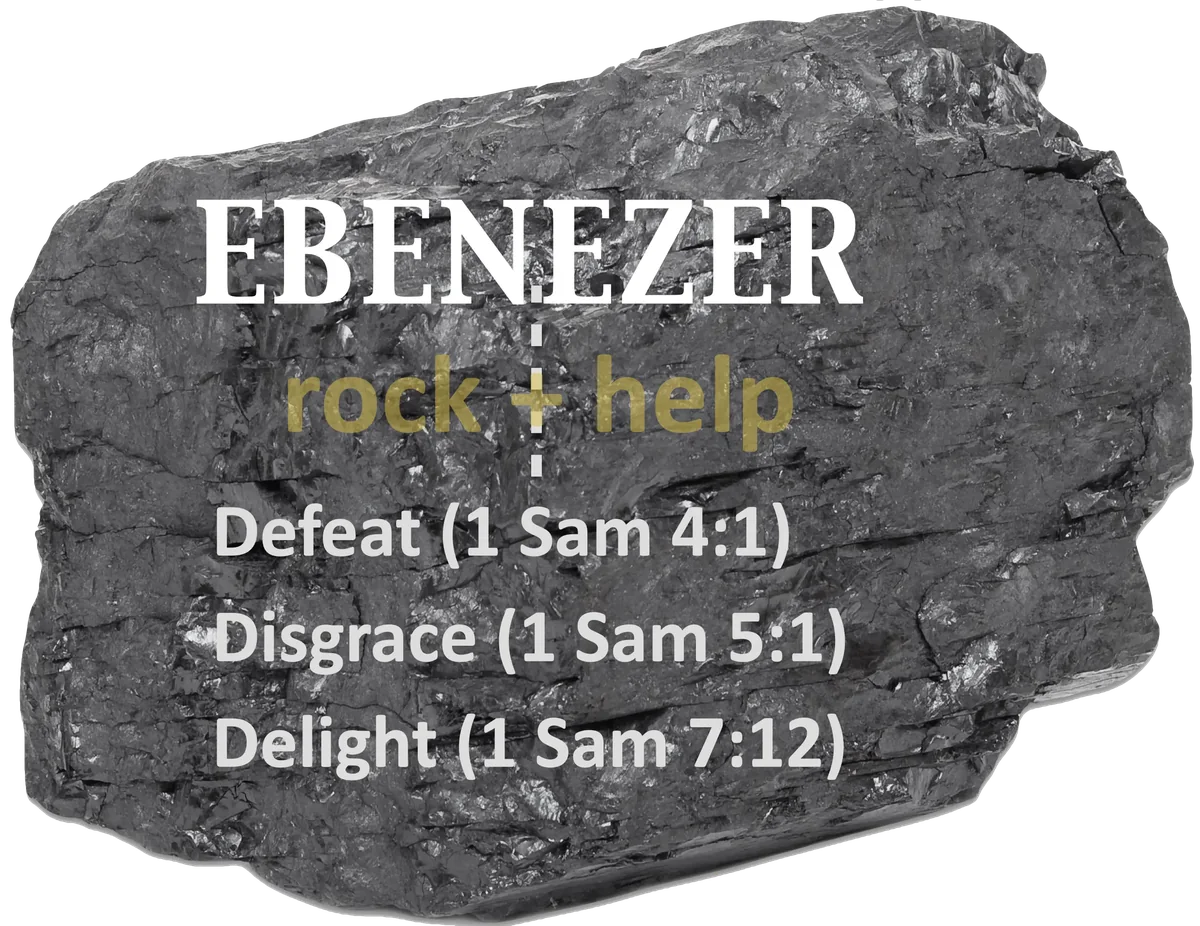
This word carries a beautiful progression through the earlier chapters. There was defeat in 1 Samuel 4, when Israel tried to use the ark without true obedience. There was disgrace in 1 Samuel 5, when the ark was captured and taken into Philistine territory. Now there was joy in 1 Samuel 7. The place of painful memory became connected with the Lord’s merciful help.
God can transform the meaning of our past. The old defeat need not be the final word. The place where pride fell can become the place where grace is remembered. The chain that once represented our slavery can become part of our testimony to Christ’s freedom. We do not celebrate the sin or the suffering. We celebrate the Lord who met us there and helped us.
“Thus far” also teaches continued dependence. Samuel did not say, “We have now become strong enough to manage without God.” Every step had been sustained by the Lord. The memorial looked backward with gratitude and forward with trust. The God who had helped them so far would remain their hope. The closing verses tell us that Samuel continued to judge Israel. He traveled his circuit and returned to Ramah, where he built an altar to the Lord. Renewal was not limited to a single emotional gathering. It led to ongoing leadership, worship, justice, and faithfulness.
Application: Turn, Purify, and Trust
Are there signs of oppression in your life? Do you repeatedly return to guilt, hatred, bitterness, lust, control, wealth, or pride? Don’t just ask how to feel less pain. Ask what has claimed your heart. The first step toward renewal is to be honest before the Lord.
What is the first step you need to take to purify your heart? Return to the Lord with all your heart. Remove the competing gods. Turn your heart to the Lord. Serve Him alone. Identify, reject, and dismiss your confidence in the idol, and step out in faith.
Remember the intercessor. Samuel prayed for Israel, but Jesus Christ is the greater intercessor. He offered the sacrifice, bore our guilt, rose from the dead, and lives to set His people free. “If the Son shall make you free, you shall be free indeed.”
Conclusion
Our oppression will endure as long as the impurity of our heart continues.
Freedom comes when we repent and wholly seek the Lord.
Christ Jesus is the Rock who can intercede and set you free.
Celebrate the way God has set you free. Raise your Ebenezer. Remember where He met you, how He forgave you, and how He broke the power of what once ruled you. It will be different for each of us. Share your testimony about Jesus. A testimony glorifies God and encourages others who still believe that freedom is impossible. Renewal begins when God’s people stop defending divided devotion. It deepens when we humble our hearts through repentance and confession. It becomes a celebration when the Lord delivers and restores. Turn. Purify. Trust. Now is the time.