Knowing God
The Bible Teaching Commentary
Deuteronomy 5:1-33
Paul J. Bucknell
Introduction | Call (5:1-5) | Standard (5:6-21) | Relationship (5:22-33)
Purpose: This second page of the Deuteronomy 5 study discusses God’s gracious and consistent call to His people to return to Him.
Our Gracious Call (Deuteronomy 5:1-5)
God cares for us. That is why He consistently makes creation proclaim His glory. It is also the reason He speaks His Word to people (cf. Ps 19). He offers both a broad invitation and specific ones. Jesus said, ”Come to Me, all who are weary and heavy-laden, and I will give you rest” (Matthew 11:28).
Why are we so resistant to responding to God? Moses, many years ago, came to the generation that survived forty years of wilderness wanderings and told them that God had extended His grace and invited them to join Him in the covenant He made with their ancestors. This is truly kind.
“Then Moses summoned all Israel, and said to them, “Hear, O Israel, the statutes and the ordinances which I am speaking today in your hearing, that you may learn them and observe them carefully. “The LORD our God made a covenant with us at Horeb. “The LORD did not make this covenant with our fathers, but with us, with all those of us alive here today. “The LORD spoke to you face to face at the mountain from the midst of the fire, while I was standing between the LORD and you at that time, to declare to you the word of the LORD; for you were afraid because of the fire and did not go up the mountain.” (Deuteronomy 5:1-5).
Although you believe you are mature and strong enough to hear the truth about life, are you? Have you met someone who can’t handle hearing that her boyfriend broke up with her? Or a spouse who can’t cope with a dying partner? Or tell a parent of a child in the womb who is not moving? If you are the one delivering the news, many thoughts might be going through your mind. You want to protect your relationship with that person–you wonder if you should avoid mentioning it. But you must tell them. What if they respond poorly?
There are two sides everywhere we go, even in theological circles. Some people believe we shouldn't share the facts about God. Sometimes they are motivated by genuine concern. They seem to focus so much on the feelings of others that they start to believe God is different from what the Bible says. How people respond is seen as more important than presenting Him the way He reveals Himself in the Bible. Moses faced a tough challenge here as the mediator between God and the people. On one hand, there is a God who causes the people (and Himself) to have great fear, and on the other hand, there are the people who you fear will rebel (they've done it many times already) if you are too strict with them.
As we study Deuteronomy, we might ask similar questions. Consider this: “Would you rather know the truth about God or not?” God Himself could have hidden behind a multitude of idols and gods, simply letting people believe what they wanted and follow their natural instincts. Were these people really ready to know Him? Yet He broke through and sought a relationship with a people He wanted to call His own. Remember, at this point, they proved themselves quite rebellious. They preferred to go back to Egypt rather than follow God.
Moses was willing to speak forth what God told him. One generation showed their dislike for Moses. Now Moses faithfully, once again, presents God and His covenant.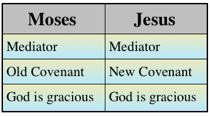
| Moses | Jesus |
|---|---|
| Mediator | Mediator |
| Old Covenant | New Covenant |
| God is gracious | God is gracious |
Moses was squeezed by God and the people. In verse 5, he says, “I was standing between the Lord and you at that time, to declare to you the word of the Lord; for you were afraid because of the fire and did not go up the mountain.” Moses was a type of Jesus Christ. Moses was a mediator of the Old Covenant, and Jesus the mediator of the New Covenant. Moses addressed the people about the covenant; Jesus explained the terms of the Covenant. In both cases, God the Father was extremely gracious and kind to make any offer at all. He did not have to.
It is true that God is a God of fire and judgment, but through His covenants, He has revealed a way for His people to draw close to Him and avoid His wrath. When everyone seems too busy to care, God is still there, seeking a relationship with us. You might want to fault God on this or that, but make sure you never say He does not care. Today, He is welcoming us into His family. He sent Jesus to make the way to Him; Christ died in our place. Truly, we all ought to put our fears and pride aside and say to Him, “If you so love me, I will also love you.” “If you put so much into this relationship, then it is only appropriate that I affirm that love with my own love and obedience to you,”.
Application
 There is only one God. He is calling us to enter His loving covenant today. Are we more concerned with what people think of us than with our response to Him and His love? Are we so occupied with the temporary things of the world that we are unwilling to let the Eternal One pass His love into our needy lives? Jesus says, ”Come to Me, all who are weary and heavy-laden, and I will give you rest” (Matthew 11:28). Will you not go to Him now?
You may have been raised in the church. Maybe your father is a pastor or elder. The scripture here shows Moses addressing not just the fathers but the children—young or grown-up. It is not enough for our fathers to believe. We must believe too. Even if our fathers rejected the Lord, we still need to believe. We ourselves must repent, believe, and be baptized. No one can do it for us. Through obedience, we confirm our part of the covenant. Obedience does not make us righteous, but it does establish God’s covenant with us. Through obedience, we show our faith.
Next -> Our Loving Standard - The Ten Commandments (Deuteronomy 5:6-21)