
Developing Strong Christian Lives
The Bible Teaching Commentary
Deuteronomy 8:1-20
Paul J. Bucknell
Introduction | A. Embrace | B. Understand | C. Respond | Podcast
Purpose: Deuteronomy 8:1-20 shows the important place understanding life’s experiences in light of God’s Word has in our spiritual development.
B.) Understand life’s experiences
We deepen our intimacy with the Lord by remembering how He has wonderfully worked in our past and has set out beautiful plans ahead for us. He desires to establish a more blessed estate by helping us faithfully serve Him in our present circumstances. (Deuteronomy 8 specializes on giving us an overview of life of those under His covenant. I hope you belong to God’s covenant. Otherwise you will be overwhelmed by an unbalanced perspective of life and perish. God’s grace is found only in those who find refuge in Jesus Christ where we can become the children of God.
 Remember, all that we experience in life enhances the teachings of God’s Word. God brings foundational spiritual experiences into our lives to help shape our unique spiritual knowledge. Many of them did not have God’s Word to teach them regularly. They, like us, had to interpret their life experiences from God’s perspective to help guide them. Let’s look at how God does this through the experiences He takes us through.
“And He humbled you and let you be hungry, and fed you with manna which you did not know, nor did your fathers know, that He might make you understand that man does not live by bread alone, but man lives by everything that proceeds out of the mouth of the LORD” (Deuteronomy 8:3).
 I can remember many experiences that the Lord has guided me through. Some of them have been difficult, sometimes because of my own mistakes. For example, about one or two years after I was saved, I stopped attending extra church activities like Bible Studies. I thought I was making progress, but I later realized I might have been the saddest teen around. I enjoyed playing basketball with my friends, but I missed out on understanding what real life was really like. I was so thankful to return to the Lord. The Lord brings us from hard times to blessings. Every child of God is shaped by God’s love. His love helps us endure tough times. Those raised in loveless homes often doubt God’s genuine and caring intentions. However, God always loves His children. He has promised to care for them.
“In the same way God, desiring even more to show to the heirs of the promise the unchangeableness of His purpose, interposed with an oath, in order that by two unchangeable things, in which it is impossible for God to lie, we may have strong encouragement, we who have fled for refuge in laying hold of the hope set before us” (Hebrews 6:17-18).
The Lord wants us to understand the entire process by which closeness and intimacy with Him develop. This was Moses’ clear purpose for writing this passage. No matter how deprived we were in our earlier years, the Lord wants you to know how kindly He deals with you.
The process of Growth
Let’s examine more closely how God emphasizes this through what Moses has observed and understood about God’s actions with His people under His covenant. There are three stages: the need, the solution, and the understanding. We could also describe them as: crisis, relief, and insight.
The Need (Crisis)
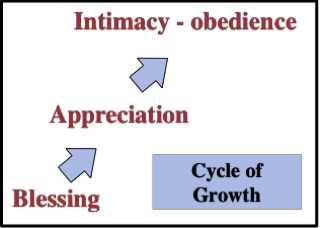 Moses says that God brought His people through humbling circumstances. I do not know if you have ever gone through such difficult times, but everyone in them shares a common feeling: Escape. Relief. Help. Exit. The situations might differ. For the Israelites, they ran out of food. Most of us might think about buying more food, but that is not easy in the wilderness, especially with several million people. What if they found one quail, even ten? Would they not argue and fight over the limited food resources?
Unless they faced such hardships, they would not learn some essential truths about God that they needed to know. What did God do? God has a good purpose. He brought relief.
The Care (Relief)
He provided manna, an unknown food that only lasted during their time traveling in the wilderness. Once they actually entered the Promised Land and ate the local food there, the manna stopped. Since then, manna has become history. But during those forty years, God provided miracles day by day. Notice in Deuteronomy 8:3, it is God who humbled them: “He humbled you and let you be hungry.” God will do such things in our lives. He has done such things in our lives. He is not being malicious. It is the way one deals with children. You never give them everything they need. You carefully evaluate things and give them at the proper time so that their learning experiences are maximized.
Let me share one of these fundamental spiritual experiences I went through. I remember trying to go on a short-term mission trip related to my training in foreign missions. Time quickly passed by. The deadline for deciding whether I was going or not was approaching. The mission organization called asking about financial support. I had almost nothing. I asked how many days I had left before the final deadline. They said three days. You can be sure I was really seeking the Lord during this time. On the very last day, He miraculously prompted someone to give immediately. These lasting memories shape my life and faith.
In Deuteronomy 8:4, Moses talks about how their clothes and shoes did not wear out during the long forty years. These are the miracles that the Israelites witnessed. They had no reason to doubt God and His care for them. All our experiences are different. Your experiences differ from mine, but we all see how special God works in the lives of His people.
Application
Can you recognize deep struggles you have experienced? Perhaps you are facing them now. Will you turn to God and learn from these experiences?
Will you cherish these life lessons so that throughout your life, you will faithfully live before Him?
Don’t doubt God during such times, or you will become confused and suffer much pain. Instead, patiently wait for God to deliver you and seek His help. The key is to focus on the lesson and find joy in the Provider rather than escaping the difficult situation.
The understanding (insight)
God is not just testing them but building up their faith so they can grow in understanding and be better prepared for life. If I always provided for my children and made them reliant on me, they wouldn't be ready for life. They need to gradually become independent from their parents' support and learn to trust in the Lord. They have to go out on their own, find a job, and face difficult and uncomfortable situations.
It is clear that God wanted to give them a deeper understanding of Him, which is why He brought these circumstances into their lives. God is sovereign and carefully works through everything to train His people. What does the Lord say here about what He was trying to help them understand?
“That He might make you understand that man does not live by bread alone, but man lives by everything that proceeds out of the mouth of the LORD.” Let's better understand what they were supposed to understand.
It is crucial for all of God’s children to understand the connection between the physical and spiritual realms. Many major philosophies and religions have gone astray due to misinterpretations of the world around them. It is very difficult to truly understand life just by living it; we need special insight. This becomes clearer when we recognize that spiritual principles exist.
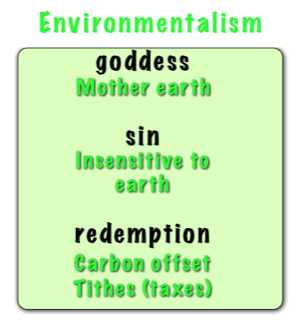
For instance, in ancient times, many devoted themselves to a grotesque female idol representing fertility. This wooden, multi-breasted figure was believed to bring fertility to women. How could they have thought this way? Maybe it's not so different from someone who believes humans shape their future or are the saviors of the environment. Even if their motives are good, without seeing the full picture, they are likely to make huge policy errors. Balance is essential.
Notice how Moses was not saying that man did not need food. Man does need material things for his body to live. Each day, we eat. All of us eat. Many in our society, however, have wrongly concluded that this is all we need. People say, “Everything depends on money.” This is another deluded perspective. If we accept this perspective, we will suffer greatly from this distorted view. One person offers food to the fertility goddess, while another uses cash to obtain carbon credits. If we just absorb the values around us without scrutinizing the scriptures, surely we will be of no use to the Master. We need understanding.
A look at the past
 The point is that if we rely solely on a secular perspective, we will never be able to evaluate things correctly. God mentioned matters of fertility in Deuteronomy 7 and 1 Samuel 1-2, and He also speaks about the importance of creation elsewhere. We need deeper insight to think rightly and make good life decisions.
So, what is it that we are supposed to know that will help us live proper lives? It is this truth here in Deuteronomy 8:3 that Jesus quoted and that still stands today to condemn secular living. Secular living claims that everything revolves around the material world. Even though evidence of a spiritual world alongside the physical world is very strong and grows stronger every day, man becomes increasingly stubborn in resisting the reality of God’s presence. Man has become so determined that he forms his own religion. The old religion that has undermined most universities and societies is secular humanism.
A more recent development is a continuation of this trend. How popular and influential it will become, only time will tell. Each person acts as their own god, describing their plight—like global warming—and sharing their solution—carbon offsets. Sin is when humans breathe or live; redemption is when we plant a tree in Kenya to offset the carbon dioxide we've generated. Environmentalism is just another way for humans to feel good about themselves in a world where they often commit many wrongs. It's another tool for those in power to deceive people and collect offerings. It’s not wrong to want to help Kenya restore its tree population in the Rift Valley, but why do you do it? What motivates you? If it’s driven by this trendy religion or unbiblical philosophy, then you’ve fallen for a false belief about redeeming the sin of your existence.
God says that life can only be understood by recognizing that “man lives by everything that proceeds from the mouth of God.” In other words, both the spiritual and material worlds are created and sustained by God. Even if we really faced global warming, we should use the scriptures to interpret our experiences. God speaks extensively about these issues and more.
Applications
We often want to understand things only within the scope of what we see. Psychology is a clear example of this, especially in its more pronounced impact on our society: psychotherapy. I mention this because it is called the ‘study of the soul,' yet few psychologists actually believe in the soul. They are a false priesthood, but there is much distorted knowledge around. It is incomplete knowledge.

I am amazed at how many people, even Christians, will entrust their money and lives to those who claim to live only for material pursuits. Even health— everything we have is from God. Should we not repent of the secularism that has deeply affected our minds and return to a sound perspective of the world? God intended to give us a basic and solid view of life. When asked what a person would do if they were seriously ill, no one said what James instructs us to do—“Ask the elders to come and anoint him with oil and pray.”
My point is not to be extreme. Does it sound like I am? Actually, this just shows how extreme the world is. They are the ones who left God and His wisdom out. We are the ones who go about our daily lives without consciously thinking about our relationship with God. The scriptures point us back to God. I expect that soon we will face a major financial crisis worldwide. The governments will try to reform themselves and act as saviors. They are more interested in power than in helping others.
The question is, how would you handle it if you couldn’t find a job for two years? What would happen if we no longer had internet access or truckers bringing food to our communities? Don’t panic. God might be trying to wake us up to realize He has been there all along. God solved the food crisis for the Israelites, didn’t He? We can trust Him. “Man does not live by bread alone but by every word that proceeds from the mouth of God.”
Application
Maintain balance. Reach out to those who understand it. Those who haven't learned these special lessons from God may have distorted views, malicious motives, and make incorrect choices.
A Look to the Future
When we examine these verses, we might feel a bit surprised by God’s strong desire to bless His people.
“For the LORD your God is bringing you into a good land, a land of brooks of water, of fountains and springs, flowing forth in valleys and hills; a land of wheat and barley, of vines and fig trees and pomegranates, a land of olive oil and honey; a land where you shall eat food without scarcity, in which you shall not lack anything; a land whose stones are iron, and out of whose hills you can dig copper.” (Deuteronomy 8:7-9).
You can criticize God if you want, but you're heading in the wrong direction in life when you do. If you or I ever decide, under His covenant, that He has lost His love for us or that we can find better love or care elsewhere than in His commands, we are mistaken. Did you notice where the Lord was leading His people? A beautiful land, full of natural resources and the ability to harvest abundant crops.
What happens in Deuteronomy itself is a good example of God’s care. His intention was to bring them there 40 years earlier, but the stubbornness and unbelief of His people prevented it. So, out of His graciousness, God performed miracles, such as wear-proof clothes and the perfect sandals. My sole fell off my sandal just two weeks ago. I probably haven’t worn them more than 80 days. Forty years equals 14,600 days. I am sure my living conditions were nothing compared to the hot, rocky wilderness journey. God could have simply let their clothes wear out. He didn’t have to provide manna for the complaining group. We see that He went out of His way to help them. This is clear proof of God’s great patience toward His people. One generation might have rejected God’s good gifts, but He continues to try to give them to the next.
Now, let us see the purpose God has for providing so nicely for them. “When you have eaten and are satisfied, you shall bless the LORD your God for the good land which He has given you” (Deuteronomy 8:10).
When people feel satisfied, they are reminded of God’s good ways toward them and give thanks to the Lord. God uses these blessings to deepen their admiration for Him. This remains true today, but many people do not sincerely thank God, not even for their food, let alone for the many other good things they have. They might say thank you, but they are not very aware of God’s role or truly appreciative of His provision. This is where the important lesson of Deuteronomy 8 comes in. God explains in Deuteronomy 8:10 that when they eat and are satisfied, that satisfaction and delight should lead people to bless God. Our experiences should foster appreciation, which in turn encourages further obedience.
Of course, if we forget or fail to fully appreciate God’s blessing in our lives, we will lack gratitude and won't have a positive learning experience. The Lord speaks about this too.
Don’t forget!
Starting in Deuteronomy 8:11, Moses begins to clearly identify why we often go through difficult times.
“Beware lest you forget the LORD your God by not keeping His commandments and His ordinances and His statutes which I am commanding you today; lest, when you have eaten and are satisfied, and have built good houses and lived in them, and when your herds and your flocks multiply, and your silver and gold multiply, and all that you have multiplies, then your heart becomes proud, and you forget the LORD your God who brought you out from the land of Egypt, out of the house of slavery.” (Deuteronomy 8:11-14)
If God uses blessings to refresh our hearts with His goodness, what happens if someone no longer connects his blessings to God? Do you own a computer? Do you truly thank God for it and feel a stream of gratitude building inside you because of it? I regularly meet people who have little or no resources. For example, I will soon visit a pastor in India whose motherboard has died, and they live on just $30 a month. Or there’s another pastor I recently visited in Nigeria who asked me to find a used laptop for him because he has no resources to get one on his own.
 Maybe we should take an inventory and start thanking God from the bottom of our hearts until we truly mean it. This might seem amusing, but is it possible that we have already devalued God’s good gifts? Have we begun to drift away from the Lord?
We can safely conclude from these verses that if we are no longer grateful for God’s provisions—from our homes to our transportation, from our household appliances to our food—we have already started to backslide. We need to be thankful and not just say thanks, although that’s a good start. This turning away from God is exactly what this passage warns us about, especially in a materialistic age.
The process is somewhat highlighted here. God’s people are first warned. They are not to forget the Lord their God. When you see yourself excusing yourself for your lack of appreciation, you have reached this dangerous point of turning away from the Lord. Let’s see how it works within this context.
The verses continue and explain how this manifests in our busy lives. Good things are meant to remind us of God’s goodness and to draw us closer to Him and encourage obedience. But at some point, something other than thankfulness takes hold in our minds—perhaps a slight callousness or a focus on how we earned something. The scriptures clearly describe this process. If we're not careful, these blessings that fill our lives can make us not only feel full and satisfied but also proud. Pride leads to spiritual forgetfulness. It causes us to forget the many great things God has done for us. Self-sufficiency is an illusion and a mockery of God, who so kindly provides for us.
In the case of the Israelites, their fathers crossed out of Egypt. Probably many of them were still bilingual and knew Egyptian. These people, more than others, should recognize that God was very good to them. He rescued them from slavery. They should remember these events, but when things go well, we are prone to forgetfulness. We forget those who helped us reach that point. This list includes our parents, governments, friends, teachers, and always God. In verse 15, the story of God’s incredible goodness to the Israelites is further highlighted.
“He led you through the great and terrible wilderness, with its fiery serpents and scorpions and thirsty ground where there was no water; He brought water for you out of the rock of flint. “In the wilderness He fed you manna which your fathers did not know, that He might humble you and that He might test you, to do good for you in the end” (Deuteronomy 8:15-16).
We already mentioned the clothes and sandals that don’t wear out, even the manna, but equally important is the protection from fiery serpents, scorpions, and thirst. The Lord brought water to them from the rock of flint. Flint is a very hard substance. How can water come out of it? It did. Again, it is a special way that the Lord provided for them to build up their faith. These great and marvelous things, unfortunately, do not always strengthen our faith.
If we doubt God’s good intentions, then we question the entire incident and forget the great things He has done for us. We shouldn’t do this, but it happens. It happens so often that Moses warns them—and through them, God warns us. I find it helpful because it reminds me to more deeply express my appreciation for the many blessings I have. The Giver is more important than the gifts. As you go through your day, start thanking the Lord for the many good things He has given you. Be specific. Think about how wonderful the washing machine and running water are. He has given you the power of wealth.
Summary
It is essential that we understand life’s experiences. That is the purpose of bringing us through such experiences. If we go through them without reflecting on God’s goodness or simply forget about them amid the busyness of life, what benefit is there? Instead, we should deepen our relationship with the Lord by remembering how He has wonderfully worked in our past and continues to make wonderful plans for us in the future. Everything we go through is meant to give us a greater understanding of God’s ways, strengthen our relationship with Him, and help us obey Him more fully.
Next -> See how we should respond to God’s work in our lives.