Knowing God
The Bible Teaching Commentary
Deuteronomy 5:1-33
Paul J. Bucknell
Introduction | Call (5:1-5) | Standard (5:6-21) | Relationship (5:22-33)
Purpose: This third page of the Deuteronomy 5 study explains the Ten Commandments as God’s loving covenant standard for relationship with Him and others.
B) Our Loving Standard - The Ten Commandments (Dt 5:6-21)
Most of us have misunderstood the Ten Commandments. We usually memorize only the Ten Commandments, not the entire covenant. The difference is minor, just the introduction, but because of this oversight, our perspective on these commandments can be wrong. Let’s examine closely this introduction, which appears in both Deuteronomy 5:6 and Exodus 20:2.
“I am the LORD your God, who brought you out of the land of Egypt, out of the house of slavery” (Deuteronomy 5:6).
It truly serves as an introduction. A person might say, “Let me introduce myself, I am ….” God does the same. This was the custom of the person offering the covenant. These covenants were common at that time and were never given by those of equal status. It was always the greater offering of the covenant to the lesser, usually the one who lost the battle.
The Lord God, as He introduced Himself, has formed a special relationship with this group. Lord is not a title but His name, Yahweh. The English translations are poor because they refuse to translate His Name. Jehovah and Yahweh are the same name. The great fathers, Abraham, Isaac, Jacob, and Joseph, were not part of this yet established covenant with God. God spoke to them, but on a different level.
They also want Abraham to be saved by faith. These Israelites were all delivered by God. The Hebrew actually uses three ‘out of’ prepositions for emphasis: out of the land, out of Egypt, out of slavery. God rescued them, and they were now obliged to Him for His deliverance.
You might say that is unfair, but remember when it was that God saved them. It was after they cried out to the Lord for help that He came and rescued them. They did ask for His help. Modern man does not believe he is a slave to anyone. Each person sees himself as his own god, ready to fight any other god that opposes his free will. Repentance is not popular. The Western world turns away from God because those influenced by the culture no longer realize they are slaves.
Man needs to wake up and realize that humans cannot simply live peacefully with one another. This is why there are so many wars, fights, and arguments—there is a clash of wills. People pursue their own desires, even at others' expense. We see it in Joseph’s brothers and in our own families. Someone recently asked, “Why do our families have to bicker over so many petty things?” Man is enslaved to his desires, which often turn into a power struggle. The most powerful, wealthy, and sometimes the clever (not always in a good way) end up as the rulers.
True freedom and democracy have developed under the protection of Christian values. By fearing God, man properly treats his neighbor. People follow the laws. Otherwise, man needs to be controlled through power and manipulation. Western governments are increasingly moving toward returning to authoritative rule. The foundation of democracy is weakening as man insists on living apart from the guidance of their Creator and Savior.
The Israelites became slaves to the Egyptians at a certain point. It is the same with us. Man was originally created to serve God. He rejected this service for the supposed freedom of another master. Mankind had a duty to serve God. God would wonderfully provide for man, but man was expected to obey God. When man disobeyed God, whom did he choose to obey? It was the evil one. Man transferred his allegiance to the serpent, which was Satan himself. Jesus sums this up in John 8:31-36.
“Jesus therefore was saying to those Jews who had believed Him, “If you abide in My word, then you are truly disciples of Mine; and you shall know the truth, and the truth shall make you free.” They answered Him, “We are Abraham’s offspring, and have never yet been enslaved to anyone; how is it that You say, ‘You shall become free’?” Jesus answered them, “Truly, truly, I say to you, everyone who commits sin is the slave of sin. “And the slave does not remain in the house forever; the son does remain forever. “If therefore the Son shall make you free, you shall be free indeed” (John 8:31-36).
“You are of your father the devil, and you want to do the desires of your father. He was a murderer from the beginning, and does not stand in the truth, because there is no truth in him. Whenever he speaks a lie, he speaks from his own nature; for he is a liar, and the father of lies” (John 8:44).
You are a slave. I am a slave. We have both committed sin and shown our loyalty, if not now because of the Lord’s grace, then certainly in the past “And you were dead in your trespasses and sins” (Ephesians 2:1).
Application
Who do you serve? Yahweh the Creator or the devil? Who do you believe makes a better Master? God is gracious enough to send a Savior, Jesus Christ, to die for our sins and rescue us from this wicked and evil generation. Will you not turn away from this evil deceiver, who only brings loneliness, grief, selfishness, and pain? The love that God freely gives to His followers is far better!
The Ten Commandments
God has redeemed them from the Egyptians through His mighty hand. Because of this, they were specially bound to Him. God listed a number of these obligations called the Ten Commandments. We will return to this topic of the Lord later, but for now, let’s turn to the actual commandments and see what we can learn about God from them.
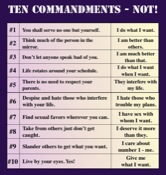 The Ten Commandments are usually divided into two categories. The first four describe man’s relationship to God, while the last six govern how we live with others. As commands or laws, they shape a people’s mindset and way of life. They guide how the Israelites are supposed to do certain things. They create a culture, in this case, a God-centered culture. Let’s look at the two tablets and the commands on them.
Table #1: Our relationship with God
God wanted people to have a good relationship with Him. They could only do this if they obeyed His commands. Is this because God was being arbitrary? Absolutely not. God is their Creator. He made them. Man ought to obey God. God is simply calling man back to the original design. That design is where the blessing will be found again.
When man sins, God must either distance Himself from man or destroy him. God is a just God. He must judge sin. He told man this even before he first sinned. “For in the day that you eat from it you shall surely die” (Genesis 2:17).
God wanted to have a people who would be close to Him. This was His original plan. God was not too busy to be with mankind; He desired to enjoy a relationship with them. By obeying these commands, God could freely move among His people. He did not use these rules to maliciously enslave them but to free them to enjoy His presence and the garden. The rules did not create the relationship but maintained it. Salvation comes through faith in God and His provision. Modern man’s distortion of our understanding of these commands endangers his survival.
Let’s examine these four commands related to our relationship with God.
- #1 “You shall have no other gods before Me” (Deuteronomy 5:7).
- #2 “You shall no make for yourself an idol…” (Deuteronomy 5:8-10).
- #3 “You shall not take the name of the Lord your God in vain” (Deuteronomy 5:11).
- #4 “Observe the sabbath day to keep it holy” (Deuteronomy 5:12-16).
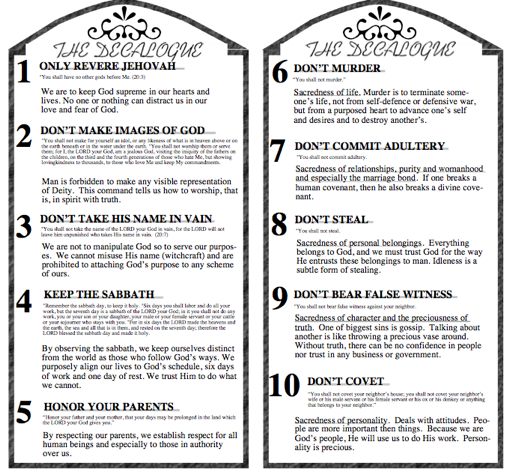 We have not fully quoted these four commandments. We are providing only a brief summary of this first tablet. What do we see here? God desires complete devotion to Himself. This makes sense because He alone is God, our Creator. He wants His people not to serve others. We should not make any images of God to remember Him or for any purpose. This makes sense. The only God we worship is invisible, and any carved or otherwise created image detracts from His true, glorious nature and can only be an insult.
We must carefully control the way we speak of the Lord. Do not use His Name in vain. You wouldn’t like someone using your name lightly; the Almighty God is very offended by this. He closely guards His Name. A curse is associated with those who wrongly use His Name.
Lastly, we are to keep the Sabbath day holy, just as God did. We should rest one day out of seven, just as He worked six days and then rested on the seventh. This isn’t so hard, is it?
I know some people will find this very difficult because of their busy lives. Run, run, run! We really struggle to slow down and build relationships, whether with God or others. I’m sure you know people who are so busy they don't even have time to spend with God. (This goes against the whole purpose of God calling us to Himself and wanting our friendship.) Relationships take time, and that’s true with God too. By taking regular pauses in life, we can better remember God’s ways. We shouldn’t be so busy providing for ourselves that we forget God and forget to enjoy life. We see a great summary of these laws in Jesus’ quote from the Old Testament.
“AND YOU SHALL LOVE THE LORD YOUR GOD WITH ALL YOUR HEART, AND WITH ALL YOUR SOUL, AND WITH ALL YOUR MIND, AND WITH ALL YOUR STRENGTH.” (Mark 12:30).
Application
The key question we need to ask is whether we can truly enjoy our relationship with God or if we see it as an invasion of our thoughts and lifestyle. If He appears to be a threat, we may often doubt Him and easily turn to idol worship. We should trust Him. God is very gracious in giving us these few rules to guide our lives so that He can be close to us. Are you committed to God? Do you organize your schedule to reflect Him? If not, you keep God at a distance. In the New Covenant, the Lord has brought us even closer than the Old Testament ever could.
Tablet #2: Our relationship with others
The last six commands outline how the Israelites were instructed to live in relation to their fellow man. These commands would not surprise anyone today. They are ingrained in most people’s conscience, even if they do not have the Bible. These are the laws upon which society is built.
- #5 “Honor your father and your mother” (Deuteronomy 5:16).
- #6 “You shall not murder” (Deuteronomy 5:17).
- #7 “You shall not commit adultery” (Deuteronomy 5:18).
- #8 “You shall not steal” (Deuteronomy 5:19).
- #9 “You shall not bear false witness against your neighbor” (Deuteronomy 5:20).
- #10 “You shall not covet...” (Deuteronomy 5:21).
These commands were carved in stone. They reflect God’s holiness. When man is willing to violate these laws, he is, in effect, violating God Himself, for man was made in God's image. We must admit that although we try to obey these commands, we do not do so perfectly. In a sense, looking at them reminds us of our failures and God’s righteousness. This covenant does not save man, but it enables a person to live by faith in the eternal God and in the salvation that He generously offers.
Jesus takes these laws here and redefines them. While these commandments are mainly prohibitive, restricting us from certain actions, Jesus shows us how to actively embody their principles. For example, we are not only to avoid coveting, but to love our neighbor and help him by sharing what we've worked hard to earn. We are not only to abstain from adultery, but to be fully committed to our spouse and the marriage covenant.
We are called not only to avoid murder but also to forgive and love our enemies. By loving our neighbors and parents, we go far beyond merely following the law. You can see how much further the Spirit of God connected with the New Covenant enables us to live daily. The Sermon on the Mount beautifully exceeds these laws. We can say that these Ten Commandments serve as a basic minimum for maintaining a relationship with God while also shaping society.
- Honoring parents establishes respect for authority and protects the elderly.
- The prohibition against adultery protects the bond of marriage.
- The prohibition against murder protects the right to life.
- The prohibition against stealing speaks about the right to own property.
- The prohibition against bearing false witness sets a high standard for courts to administer justice fairly, rather than favoring those with more influence and wealth.
- The prohibition against coveting safeguards the right to contentment and happiness. It paves the way to a spirit of gratitude.
Summary
Without moral justice, God’s wrath is unleashed on the people. This is true not only for Israel but for any nation, whether it is a dictatorship or a democracy. When disasters strike our land, it’s wise to examine the morality of our lives. Through the teaching of the law, we understand that God wants to treat us well. Sadly, the Israelites often failed to live out these principles, and instead of being a light to other nations, they became a source of shame. Once again, Jesus’ words quoting from the Old Testament best summarize our responsibilities to others.
"The second is this, 'YOU SHALL LOVE YOUR NEIGHBOR AS YOURSELF.' There is no other commandment greater than these." (Mark 12:31).
Application
 Do these commands make you think that God is withholding the best from you or trying to protect the best for you and your descendants? Do you see God’s commands as a way to deepen your relationship with Him and bring blessings into your life, or as a threat? If we doubt God’s motives, we are more likely to give in to temptation than to live according to His commands. God’s laws guide us on the path of life.
The manner in which we respond to God’s commands fully reflects the way we respond to God Himself. Through many warnings and exhortations, Moses calls God’s people to devote themselves to the God who has revealed Himself to them in His Word.