
Check out these BFF articles!

Catching the Excitement of Personal Devotions & Quiet Times
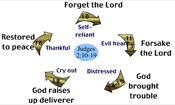

Spirit-Dependent Living
Isaiah 11:1-5
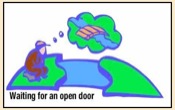
Waiting for Ministry
(1 Samuel 16)

All BFF's Biblical material in one spot! pdfs, powerpoints, podcasts, more!


Compromise was very costly in this person's life!

Basic Questions, Advanced Questions, Question formats
A. Identifying the Problem (Haggai 1:1-11)
B. Responding to His Message (Haggai 1:12-2:9)
C. Restoring His Favor upon Them (Haggai 2:10-23)
_________________________
Haggai Study Text (Haggai 1:1-11)
1:1 ¶ In the second year of Darius the king, on the first day of the sixth month, the word of the LORD came by the prophet Haggai to Zerubbabel the son of Shealtiel, governor of Judah, and to Joshua the son of Jehozadak, the high priest saying,
7 Thus says the LORD of hosts, “Consider your ways!
2 “Thus says the LORD of hosts, ‘This people says, “The time has not come, even the time for the house of the LORD to be rebuilt.”’”
3 Then the word of the LORD came by Haggai the prophet saying,
4 “Is it time for you yourselves to dwell in your paneled houses while this house lies desolate?”
5 Now therefore, thus says the LORD of hosts, “Consider your ways!
6 “You have sown much, but harvest little; you eat, but there is not enough to be satisfied; you drink, but there is not enough to become drunk; you put on clothing, but no one is warm enough; and he who earns, earns wages to put into a purse with holes.”
8 “Go up to the mountains, bring wood and rebuild the temple, that I may be pleased with it and be glorified,” says the LORD.
9 “You look for much, but behold, it comes to little; when you bring it home, I blow it away. Why?” declares the LORD of hosts, “Because of My house which lies desolate, while each of you runs to his own house.
10 “Therefore, because of you the sky has withheld its dew, and the earth has withheld its produce.
11 “And I called for a drought on the land, on the mountains, on the grain, on the new wine, on the oil, on what the ground produces, on men, on cattle, and on all the labor of your hands.”
Haggai Basic Bible Study Questions (Haggai 1:1-11)
-
How many chapters are in Haggai?
-
Scan Haggai for the phrase 'Darius the king' and note the different places it is used.
-
Next go through the book and find and locate the six times the word month is used. Note what month of the year it refers to. (This refers to the Hebrew lunar calendar).
-
What does Haggai 1:1 say what happened to Haggai?
-
Who was Zerubbabel? Who was Joshua? (1:1)
-
What was the message that Haggai gave to them? (1:2)
-
How does God describe Himself in verse 1:2? What does this mean?
-
How does the message of 1:4 differ from the one in 1:2?
-
What is the same words used in 1:5 and 1:7? Say this phrase in your own words.
-
In verse 1:6 there are five actions followed by a surprising phrase. Write these five contrasts down.
-
What is God's solution to eliminate these disappointing expectations? (1:8)
-
Verses 1:9-11 reemphasize what He already said in 1:6. Why has the sky withheld its dew and the earth its produce? (1:10)
-
Who called for the drought on the land, mountains, grain and caused great strain on the society? (1:11)
Haggai Advanced Bible Study Questions (Haggai 1:1-11)
-
If you were an Israelite, how might you respond to this prophet's challenge in 1:2 and 1:4? Why is it hard to humble oneself and acknowledge their wrong?
-
Is there anything in your life, family, church or business that the Lord is challenging you to change?
-
They have essentially neglected God's temple rebuilding because they prioritized their own needs. Have you ever neglected God's work so that you could take care of your own personal needs, whether it be housing, clothing or transportation? Share one or two stories on how you have gone without so that you could first give to the Lord.
-
Have you ever noticed the 'counterproductive' pattern that was mentioned in 1:6, 10 or 11? Was it personal, church or national? Share and be specific. Have you personally ever connected this pattern of deprivation as a way God was speaking with you? Have you heard others ever make the connection? Who and when?
-
Some people including Christians get very upset when they hear that God brings trouble on the land. Sometimes it is because they do not believe God would ever treat someone that way because He is loving. What would you answer to that? What does 1:9 and 1:11 say specifically as to whether God would do this?
-
There are also those people who think that God is not involved in the affairs of men. This is the secularistic spirit of the day. What can you show them from Haggai 1:1-11 on God's involvement in society? Does He still do this today? How do you know? Is His 'interference' good or bad? Would you rather have God speak or be silent?
Information on the Question Format
Basic Questions
These answers will be found right in the Bible passage. The NASB text is used because it is most literal (though not always best). These questions encourage one to ask, "What does the passage actually say?"
Advanced and Application Questions
Advanced and application questions are combined together in the Advanced Questions. These answers will not be found in the text as the basic questions. One has to use other knowledge that one has gleaned over the years to answer these questions properly. They are meant to encourage one to dig deeper into the point of the passage. These questions would have one ask, "What does it mean?"
Application questions are meant to be personal and have to do with ones own life. These questions encourage one to ask, "What does the passage mean to me?"
Next => Bible study questions on Haggai 1:12-2:9
Book of Haggai | Chronology | Outline | Design and Dates
Discovering an Effective Leadership Model from Haggai
Overcoming Discouragement & Depression from Haggai