
Check out these BFF articles!
Catching the Excitement of Personal Devotions & Quiet Times
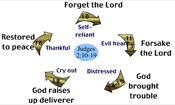
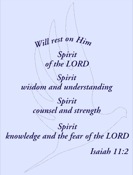
Spirit-Dependent Living
Isaiah 11:1-5
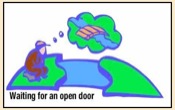
Waiting for Ministry
(1 Samuel 16)
All BFF's Biblical material in one spot! pdfs, powerpoints, podcasts, more!
Compromise was very costly in this person's life!

Basic Questions, Advanced Questions, Question formats
A. Identifying the Problem (Haggai 1:1-11)
B. Responding to His Message (Haggai 1:12-2:9)
C. Restoring His Favor upon Them (Haggai 2:10-23)
_________________________
Haggai Study Text (Haggai 2:10-23)
10 On the twenty-fourth of the ninth month, in the second year of Darius, the word of the LORD came to Haggai the prophet saying,
11 “Thus says the LORD of hosts, ‘Ask now the priests for a ruling:
12 ‘If a man carries holy meat in the fold of his garment, and touches bread with this fold, or cooked food, wine, oil, or any other food, will it become holy?’ “And the priests answered and said, “No.”
13 Then Haggai said, “If one who is unclean from a corpse touches any of these, will the latter become unclean?” And the priests answered and said, “It will become unclean.”
14 Then Haggai answered and said, “‘So is this people. And so is this nation before Me,’ declares the LORD, ‘and so is every work of their hands; and what they offer there is unclean.
15 ‘But now, do consider from this day onward: before one stone was placed on another in the temple of the LORD,
16 from that time when one came to a grain heap of twenty measures, there would be only ten; and when one came to the wine vat to draw fifty measures, there would be only twenty.
17 ‘I smote you and every work of your hands with blasting wind, mildew, and hail; yet you did not come back to Me,’ declares the LORD.
18 ‘Do consider from this day onward, from the twenty-fourth day of the ninth month; from the day when the temple of the LORD was founded, consider:
19 ‘Is the seed still in the barn? Even including the vine, the fig tree, the pomegranate, and the olive tree, it has not borne fruit. Yet from this day on I will bless you.’”
20 ¶ Then the word of the LORD came a second time to Haggai on the twenty-fourth day of the month saying,
21 “Speak to Zerubbabel governor of Judah saying, ‘I am going to shake the heavens and the earth.
22 ‘And I will overthrow the thrones of kingdoms and destroy the power of the kingdoms of the nations; and I will overthrow the chariots and their riders, and the horses and their riders will go down, everyone by the sword of another.’
23 ‘On that day,’ declares the LORD of hosts, ‘I will take you, Zerubbabel, son of Shealtiel, My servant,’ declares the LORD, ‘and I will make you like a signet ring, for I have chosen you,’” declares the LORD of hosts.
Haggai Basic Bible Study Questions (Haggai 2:10-23)
-
How many months have passed before Haggai's former word (2:1) and this new word (2:10)?
-
What ruling did Haggai ask the priests to make? (Haggai 2:11-12)
-
How did the priests answer? (Haggai 2:12)
-
What did Haggai ask the priests a second time? (Haggai 2:13)
-
How did the priests answer this time? (Haggai 2:13)
-
What is Haggai's conclusion about the Israelite people from these two questions? (Haggai 2:14)
-
What was the result of their uncleanness? Name at least four results. (Haggai 2:14-17)
-
What caused the Israelites to finally obtain God's blessing? (Haggai 2:18-19)
Haggai Advanced Bible Study Questions (Haggai 2:10-23)
-
Two months later on the 9th m onty, Haggai came by and made two important spiritual principles by asking for the priests to clarify two rulings. What were these two rulings and how did the priests answer? (Haggai 2:11-13)
-
The first ruling has to do with the way a person becomes holy or righteous. They cannot get holy by touching something that is holy. Would a holy temple, then, help them become holy? List some things people think will help them be holy if they come in contact with that thing. Do you believe any holy things can make you holy? Where do you get your holiness from? Were you holy from birth?
-
The second ruling (Haggai 2:13) declares that which is holy can be contaminated by that which is dead. If a dead person, for example, touches a holy priest, he must separate himself for seven days. This probably speaks of the polluting power of the old nature - the flesh. We have died to the old man, but if in anyway we live by its power, we are corrupted along with it. The flesh cannot do anything good. Read through Galatians 5:16-21. When was the last time you let the flesh lead you in some deed rather than the Spirit? What was the result? How did you recover?
-
Both of these rulings or principles show the utter helplessness of our good deeds to make us holy. This is the conclusion of verse 14. The works of the flesh cannot produce anything that is spiritual. Everything is unclean. Do you believe that a person can gain righteousness by trying hard in doing well? Why or why not? How does verses 2:15-17 show the result of our unclean lives.
-
Haggai 2:18-19 is set apart in contrast to the former verses. In the former, they were living under the curse of the law. It never could make a person righteous but only reveal unrighteousness. The new covenant in Christ, however, can declare a person righteous. How is a person to gain this righteousness? What does John 1:12-13 say about this? What about Romans 3:21-24? Does God see you as a righteous person? If so, how?
-
Real blessings come by Christ work on the cross. The temple building that they were building prefigured Christ's work on the cross. What does the word 'gospel' mean? How does 2 Corinthians 5:17 refer to this new blessing found in Christ? Do you think a person can be blessed if he doesn't believe and follow Christ? If yes, on what grounds do you believe this? On what grounds does Haggai 2:18 state that one gains God's blessing?
-
Jesus Christ is not only priest (Temple) but also king. Kings like Darius and all the other ones will fall down before Christ the King. Some people believe Jesus is king only when He returns. Notice that it is the same day that Jesus is priest that He is king (Haggai 2:18, 20). What does John 18:36 say about Christ's kingship? Is He now king? Check out Revelation 1:5-6. Practically, do you now recognize Jesus as true king or another? Do you obey Him without question?
Information on the Question Format
Basic Questions
These answers will be found right in the Bible passage. The NASB text is used because it is most literal (though not always best). These questions encourage one to ask, "What does the passage actually say?"
Advanced and Application Questions
Advanced and application questions are combined together in the Advanced Questions. These answers will not be found in the text as the basic questions. One has to use other knowledge that one has gleaned over the years to answer these questions properly. They are meant to encourage one to dig deeper into the point of the passage. These questions would have one ask, "What does it mean?"
Application questions are meant to be personal and have to do with ones own life. These questions encourage one to ask, "What does the passage mean to me?"
Return to Haggai index