
Genesis — The Bible Teaching Commentary
Genesis 3:1–6: God's Test and the Serpent's Temptation
Paul J. Bucknell
1 Now the serpent was more crafty than any beast of the field which the LORD God had made. And he said to the woman, “Indeed, has God said, ‘You shall not eat from any tree of the garden’?” 2 And the woman said to the serpent, “From the fruit of the trees of the garden we may eat; 3 but from the fruit of the tree which is in the middle of the garden, God has said, ‘You shall not eat from it or touch it, lest you die.’” 4 And the serpent said to the woman, “You surely shall not die! 5 For God knows that in the day you eat from it your eyes will be opened, and you will be like God, knowing good and evil.” 6 When the woman saw that the tree was good for food, and that it was a delight to the eyes, and that the tree was desirable to make one wise, she took from its fruit and ate; and she gave also to her husband with her, and he ate (Genesis 3:1-6).
 Genesis 3:1 introduces a third player in the form of one of the creatures–the serpent. Strange that a serpent should talk to man! It is here in Genesis 3:1-6 that we begin to understand why there are so many problems in the world.
1) The Identity of the Serpent (3:1)
The scriptures in Genesis 3:1 state one thing about the serpent.
The serpent was very crafty: “The serpent was more crafty than any beast of the field” (Genesis 3:1). All the other things that are stated about him later on are kept hidden from the reader at this point.
Instead, we are introduced to the serpent through what he does. “You shall know them by their fruits” (Matthew 7:16, 20). The Lord wants us to understand that it is more important to discern false words than to know the source of them. Unfortunately, we spend more time learning about false sources and thoughts (e.g.,) religions and philosophies) than on how they deceive and convince us of their thoughts. Knowledge does not equal discernment!
The scriptures do later inform us more about the serpent. Evidently, the Lord does want us to know more about the evil one and to raise our caution so as to prevent ourselves from falling to his deceit, especially at the end of time.
If we want to know more about the serpent, we will need to see what the New Testament says. (2 Corinthians 11:3; Revelation 12:9, 14,15; 20:2). This last verse more clearly identifies him as Satan and the devil.
“And he laid hold of the dragon, the serpent of old, who is the devil and Satan, and bound him for a thousand years” (Revelation 20:2).
 There is an arch enemy who sets himself to destroy the people of God. (Click image on left for series). His intention of beckoning Eve into the Garden was not innocent or good in any sense. He accomplished his purposes largely through deceit, that is, falsehood. This is why each of us needs to be trained in the truth of God’s Word.
Discussion questions
- Did you ever feel or think one way, even though your feelings did not fully reflect the facts? Should we trust such feelings? (Comment on Proverbs 28:26).
- How are we going to discern error? We must ask, “How does this differ from what God says?” But we must know God’s Word in order to do this! What ways are you learning God’s Word?
2) Serpent's Line of Questioning
This conversation between the serpent and Eve reveals a number of things about how the evil one still tempts and ensnares God’s people today. Notice that more details of this conversation are given than the one between God and Adam. The purpose of this section is to train us in discernment. Genesis 3 records two statements of the devil (Genesis 3:1, 4-5). We can learn a lot about him and his ways by carefully observing his statements.
Get the 300+ page book on Genesis! See details.
Serpent's Statement #1
‘Has God indeed (really) said, “You shall not eat of every tree of the garden”?’ (Genesis 3:1)
The serpent was obviously familiar with both God (notice his deliberate lack of using God’s Name ‘Lord–Yahweh’) and His words. The serpent’s words were carefully crafted around what God had said. He was not seeking information here but presenting doubt. He evidently knew what God had said. He used the question format to cast a negative glare on God. He made it sound as if God was not being very nice. He did not speak his point directly but craftily. He caused Eve to focus on God’s prohibition in a negative way. Perhaps we could expand this in our own words,
“Oh, you mean the God who supposedly takes care of you and love you told you not to eat from the trees in the garden? How just like him!”
The serpent by his question covered up his motive and guided Eve to doubt her trust in God. We cannot say that he lied because it was a question, but in fact he introduced false thoughts which he used to confuse her. The fact was that God had given all the trees except one to eat from, but his question caused her to think that God had withheld the best from her. Where he was subtle in the first statement, he was much more direct in the second statement.
Serpent's Statement #2
You will not surely die. For God knows that in the day that you eat of it your eyes will be opened, and you will be like God, knowing good and evil. (Genesis 3:4-5)
 The Serpent goes much further here than in the first twisting of God’s word. In this second statement he went to outright denial and contradiction of what God had earlier expressly to them. As yet they did not know death. They had not lost the fellowship of God. They trusted that God loved them and meant what He said. They believed God had their welfare in mind for all their provisions including even this prohibition. All this soon changed, however.
The serpent spoke in outright contradiction to God’s word. Eve knew and practiced God’s Word, but an appealing promise caught her off guard. Note the nature of the promise. You do not have a way to test it independently without disobeying or setting aside God’s clear warning and its negative consequences. How is this like some modern marketing tricks? This is important regarding temptation.
The serpent has not clearly defined his purpose in all this. A stranger causes all this doubt in that one short moment to fly through her formerly pure mind. Perhaps we underestimate the place thoughts can have on our minds even when we do not ‘believe’ them.
She knew God’s Word. She evidently learned it from Adam. Genesis 2:16 clearly states that God commanded Adam, not Eve. “And the LORD God commanded the man, saying, “From any tree of the garden you may eat freely” (Genesis 2:16). Adam, as head, rightly communicated God’s commands to her. Perhaps the evil one chose to speak to her rather than Adam because she heard the command indirectly through Adam rather than directly from God. He attacked the side rather than the head. Her immediate and proper response to the serpent in Genesis 3:2-3 demonstrates that she fully knew what God wanted.
And the woman said to the serpent, “From the fruit of the trees of the garden we may eat; but from the fruit of the tree which is in the middle of the garden, God has said, ‘You shall not eat from it or touch it, lest you die’ (Genesis 3:2-3).
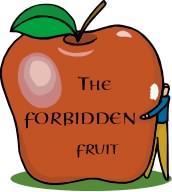 Since the recommendation by the serpent was so clearly in conflict with God’s word, the decision boiled down to whom Eve trusted. Either God, whom she had known well from the beginning and from whom she derived her being and all her position, or the serpent, whom she did not know at all.
She could have protected herself by thinking who was most trustworthy or simply focus on the Lord’s command. Her decision to listen to the serpent in the end had far-reaching consequences. Before discussing these, though, let’s first look closer at why Eve decided to forsake the one she trusted for one she hardly knew.
3) Eve’s decision-making considerations
The scriptures are quite clear on the process by which Eve chose to disobey God. We are not told whether Eve asked further questions. Perhaps it is unimportant. The longer she toyed with the idea of eating the attractive fruit, the more she allowed her mind to focus on that suggestion, and the less she thought of God’s clear command.
 How did someone go from full trust in God to making such a blunder? Remember that the directive from the serpent openly challenged God’s clear command. The subtlety of the first statement was nowhere to be found in the blatant contradiction of the second. How could the evil one convince a sinless person made in the image of God to disobey God? If she could be so blinded, what about us? Jesus wisely reminded us to seek extra protection from these temptations in the Lord’s prayer, “And do not lead us into temptation, but deliver us from evil” (Matthew 6:13). Let’s look closer at the reason why she submitted to the evil one.
There were three clear reasons stated in Genesis 3:6 as to why Eve was persuaded.
- good for food
- pleasant to the eye
- desirable to make one wise
Some have wisely seen these three inward attractions (i.e. lusts, desires) to be behind John’s admonition in 1 John 2:16-17. The food is the lust of the flesh or the appetites. That which the eye sees becomes something that catches our attention. That which makes one wise closely aligns itself to how one thinks others might perceive oneself. In this case, she thought she would be wise.
For all that is in the world, the lust of the flesh and the lust of the eyes and the boastful pride of life, is not from the Father, but is from the world. And the world is passing away, and also its lusts; but the one who does the will of God abides forever (1 John 2:16-17).
Desires have their good place in our lives. God has given us these desires to help us explore and discover different ways that He has wonderfully provided for us. But when we step into illegitimate ways as defined by God to fulfill them, then the desires lead us into sinful decisions where we disobey God and find fulfillment our own way. This ‘choice’ is what characterizes our modern world.
We should not think that her decision was lopsided against her favor. God, actually, had heavily prepared the first couple with many wonderful words, acts, and reminders of His care for them. They had every reason to trust God. After all, He just gave Adam that special woman! Here are a few items that fostered the right decision.
- God personally revealed Himself to them (note: His name Yahweh) and talked with them.
- The Lord provided clear and unambiguous words as to what was right and wrong.
- He warned them what they shouldn’t do.
- He provided an abundant supply to meet their needs.
- Her husband told her what not to do.
- The Lord told them of the consequence of death if they disobeyed.
- The Lord had created a lovely garden for them.
So why did Eve still sin? She allowed herself to focus on what was not true and, therefore, was unable to allow that which she knew to be true to properly shape her decision. Adam was a different case. Eve was deceived, but Adam chose to go along with Eve. Perhaps he thought that he would lose Eve. His sin was the worst and brought the world into sin.
For it was Adam who was first created, and then Eve. And it was not Adam who was deceived, but the woman being quite deceived, fell into transgression (1 Timothy 2:13-14).
4) Adam’s Response
Adam, the leader of the home, the one who named his woman, should know and act better. But surprisingly, the Bible is silent on Adam putting up any resistance at all. Perhaps there was a delay of time when he thought what would happen to her. He might have also suffered this trio plague of desires: flesh, eyes, and pride as he thought about losing his woman. He took the serpent’s cunning bait through his wife, ‘hook, line and sinker’.
1) Why didn’t Adam implement any kind of filter to protect Eve from the serpent’s words?
2) Should our fascination with or love for our spouses set aside our responsibility towards God?
Marriage is not only between a man and a woman, but in truth, before God too. God, as the Creator, is the overseer of marriage. It is each person’s responsibility and a healthy relationship with God that strengthens the bond between the two people.
The point here is to underscore the order of priority of man’s loyalty in relationships:
- Unique Personal Relationship of God to man
- Relationship of man to His wife preceding all other ‘interhuman’ relationships
- Relationship of man to other creatures under God’s sovereignty
 One last thought. Why is it that Adam sinned? The account relates it as if there was no tension in Adam’s mind. “She also gave to her husband with her, and he ate” (Genesis 3:6). It seems so simple and innocent as passing food around the dinner table. 1 Timothy 2:14 clearly tells us that Adam was not deceived like Eve. “It was not Adam who was deceived.”
BFF Homepage | Top | Back | Bible Topics | Genesis | Assignment
Biblical Foundations for Freedom